Have you ever wondered which policy is better for your needs—term or whole life insurance? Choosing the right type of coverage is important if you want to shape your financial future and safeguard your loved ones.
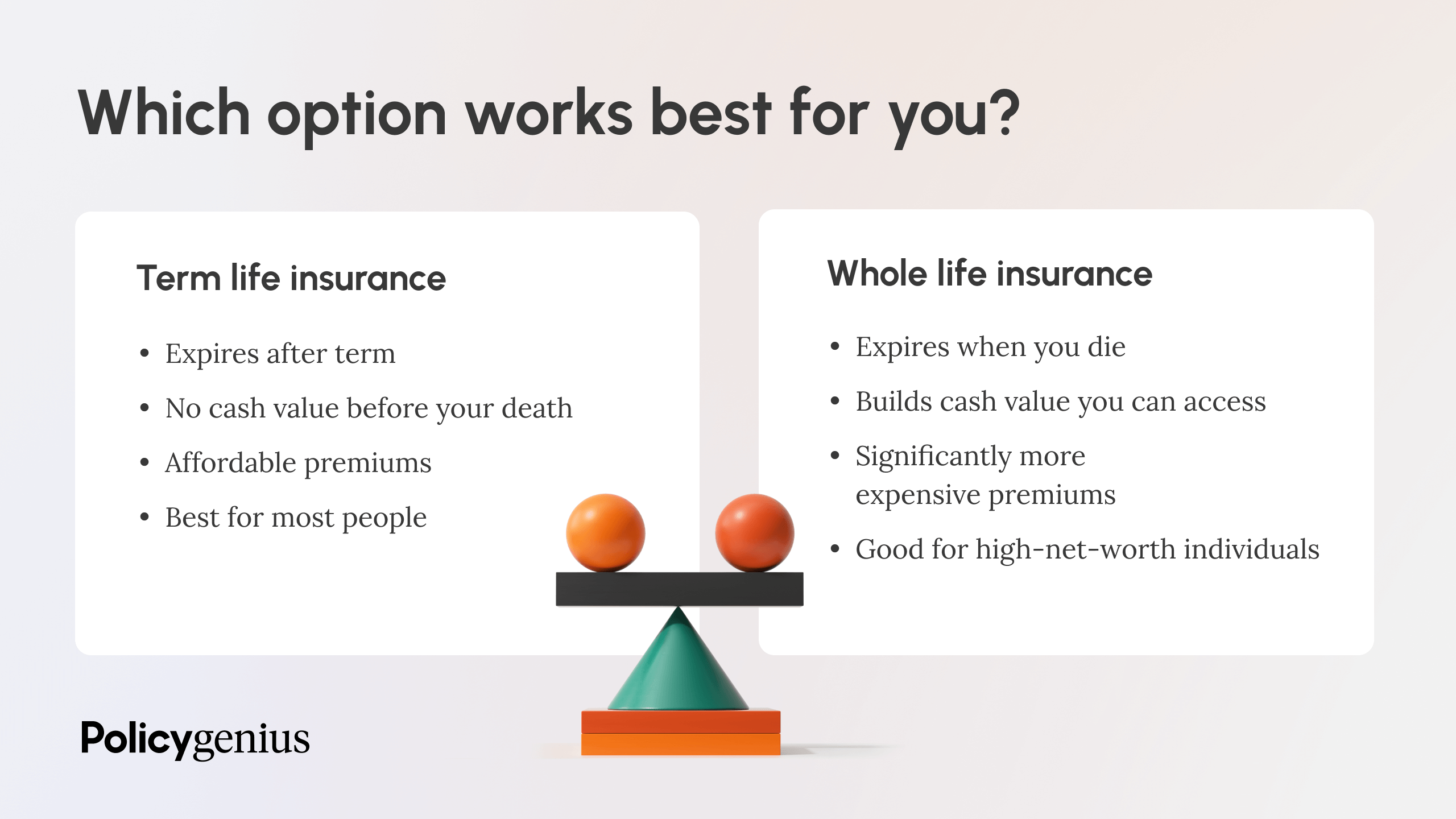
Term life insurance is simple, affordable, and focused on providing financial security for your family if the unexpected happens. Whole life insurance, on the other hand, attempts to mix protection with investment, but high fees and commissions often make it a poor financial choice.
Before you make a decision, let’s look at the differences between the two.
Understanding Term and Whole Life Insurance

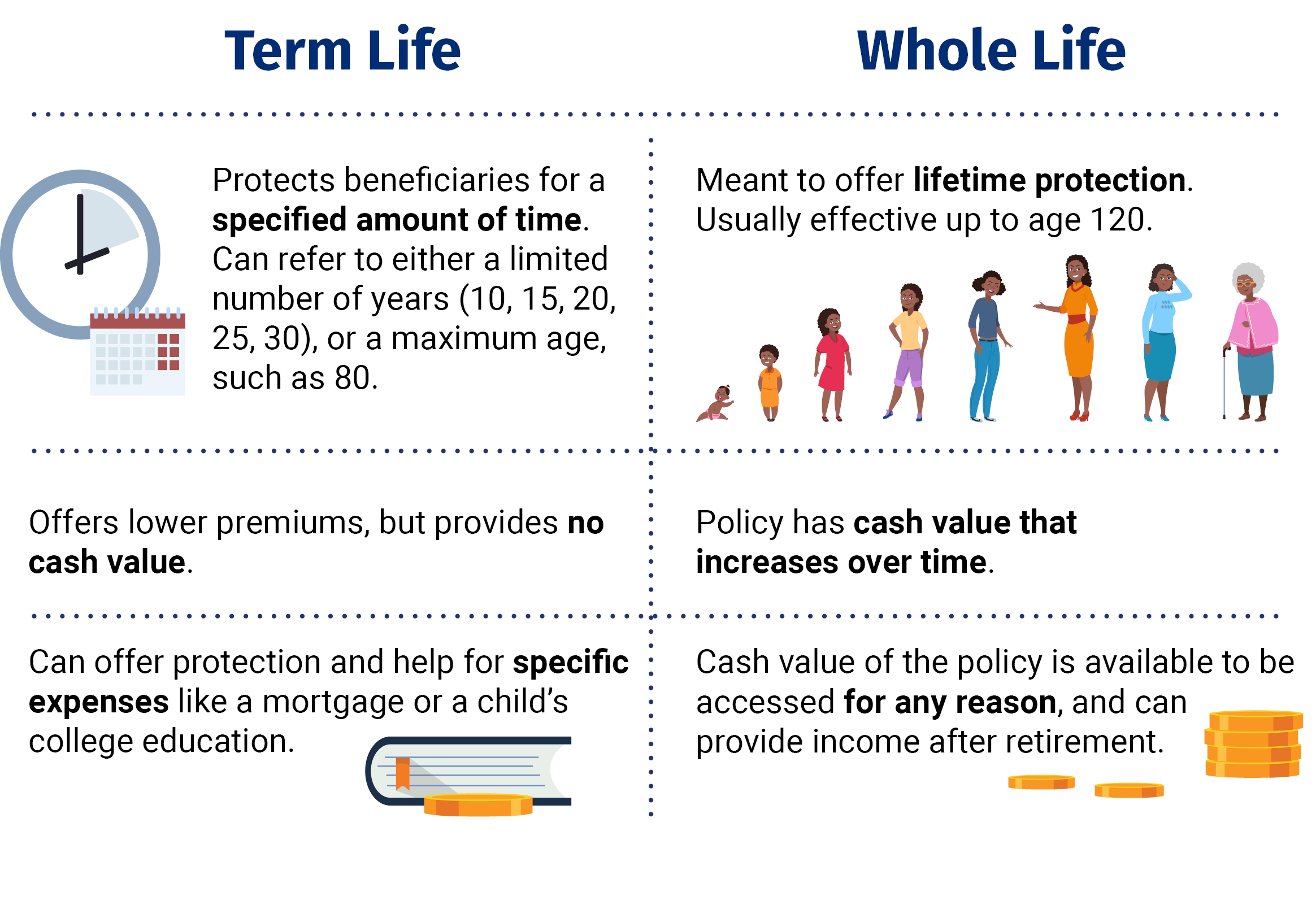
Term life insurance is straightforward. It provides coverage for a set period, typically 10, 20, or 30 years. If you pass away during this term, your beneficiaries receive a payout, also known as the death benefit. Term life insurance is often called “pure insurance” because its sole purpose is protection without any added investment features.
On the other hand, whole life insurance offers coverage for your entire lifetime, combining insurance with an investment component. While it may sound appealing, the costs are significantly higher than term life insurance.
The Cost Difference: Term vs Whole Life Insurance
One of the most significant factors to consider is cost. For a healthy 30-year-old:
- A $500,000 term life policy typically costs $20–$30 per month.
- A $500,000 whole life policy can range from $300–$400 per month.
Why the massive difference? Whole life insurance premiums cover not only the cost of insurance but also fund the cash value account and the company’s overhead, including hefty agent commissions.
| Pro Tip: Instead of paying higher premiums for whole life insurance, consider buying term insurance and investing the difference in low-cost index funds. |
Why isn’t Whole Life Insurance a Good Investment?
Whole life insurance is often marketed as a two-in-one solution that offers both coverage and savings elements. But that’s just a part of the actual truth, which is:
- The cash value grows slowly—-often at a rate of 1% to 3.5%, which barely keeps up with inflation.
- You’re paying high fees and commissions, which significantly eat into your returns.
- If you need to access the cash value, you often have to take out a loan against your policy, meaning it’s not truly your money.
When Should You Choose Term Over Whole Life Insurance?

For most people, term life insurance is the better choice. It’s ideal if you want affordable coverage to protect your family during your working years. Term life insurance also comes in handy when you don’t need lifetime coverage or an investment component tied to your insurance.
Whole life insurance may only make sense in rare cases, such as for high-net-worth individuals looking for estate planning tools.
A Real-World Example
Let’s say you’re a 35-year-old woman with $100 a month on life insurance.
- If you choose term insurance, you can secure a $1 million policy for 20 years. The remaining money can be invested in a mutual fund, earning an average of 8% annually. After 20 years, your investments could grow to over $60,000.
- With whole life insurance, your $100 might only buy you a policy worth $250,000, and the cash value may only grow to $20,000 over the same period.
Who should have life insurance?
If anyone depends on your income, you should have life insurance. This may include a spouse, children or parents. Likewise, if you have a non-working spouse, he/she should have life insurance as well. If something were to happen to the non-working spouse, you would likely need to compensate someone to cover those duties (childcare, etc).
How much life insurance should you have?
As a general rule of thumb, you want to have:
- Coverage equal to 10–12 times your annual income
- Term of 15–20 years (how long the policy lasts)
- Level term policy (so the premium stays the same)
So, if you make $50,000 a year, you need a policy worth around $500,000–600,000.
Protect Your Future, Invest Wisely
When it comes to deciding on term or whole life insurance, the choice can have a significant impact on your financial future. So, choose wisely because, in the end, what matters most is protecting your loved ones.